
__24C05D67dI.webp)
2026-07-24
SSD University
DRAM SSD vs. DRAM-less SSD: Performance, Latency, and Application Guide
Whether an SSD includes dedicated DRAM can affect random I/O performance, command processing, and latency consistency. DRAM-less SSDs use a simpler hardware design and may offer advantages in cost, power consumption, and board space.
For enterprise, industrial, and embedded systems, however, DRAM configuration should not be evaluated in isolation. Sequential performance figures alone do not show how an SSD will behave under sustained or concurrent workloads. Access patterns, latency requirements, endurance, operating conditions, controller design, firmware, and total cost should all be considered.
What Does DRAM Do in an SSD?
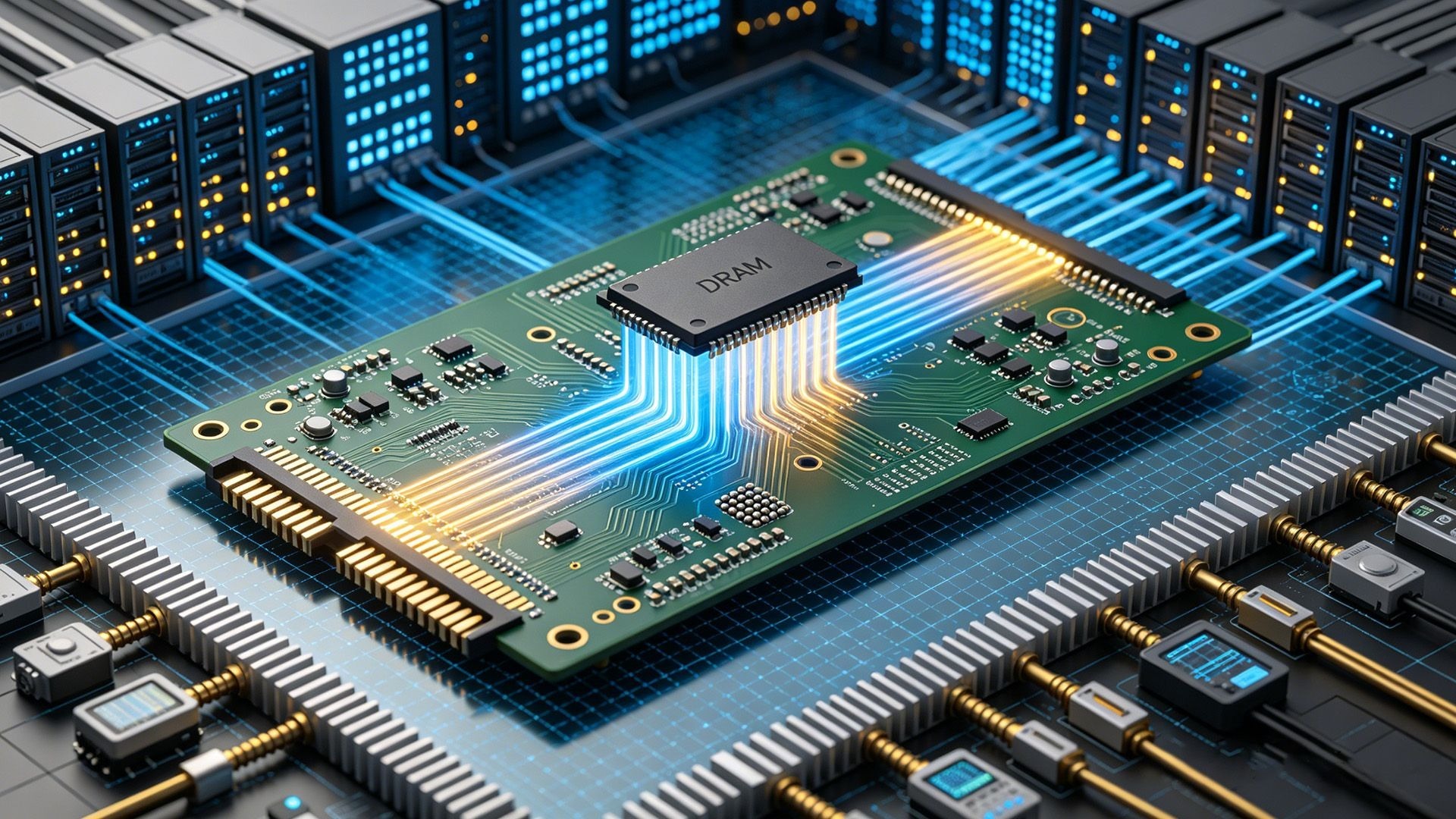
DRAM, or Dynamic Random Access Memory, serves as high-speed working memory for the SSD controller, primarily storing FTL mapping information and metadata for faster access.
An SSD relies on the Flash Translation Layer, or FTL, to manage the mapping between the logical addresses used by the host and the physical locations of data in NAND flash. With dedicated DRAM, the controller can retrieve mapping information more quickly, reducing the need for additional NAND accesses and lowering lookup latency.
DRAM performs several key functions in an SSD:
- Storing the FTL Mapping Table
The host accesses data using Logical Block Addresses (LBAs), while the SSD controller maps those addresses to physical locations in NAND flash.The FTL maintains this mapping so that the controller can locate and manage the requested data efficiently.Storing frequently used FTL mapping information in DRAM shortens lookup time.This advantage becomes more significant when the system processes large numbers of small files, random read and write operations, or multiple concurrent commands.
- Accelerating Data Access Scheduling
In I/O-intensive workloads with frequent random access, DRAM helps the controller manage command queues and schedule read and write operations more efficiently.
By prioritizing read and write operations more efficiently, the SSD can reduce access latency under heavy workloads and maintain more consistent performance.
- Buffering Host Write Data
Depending on the controller and firmware design, host write data may be buffered in DRAM before being committed to NAND.
This process can improve write efficiency and help maintain stable performance, depending on the controller architecture and firmware design.
- Reducing Write Amplification
Faster access to mapping information can help the controller manage garbage collection and data placement more efficiently. Depending on the firmware, NAND type, over-provisioning, and workload, this may reduce unnecessary data movement and help control write amplification.
How Does a DRAM-less SSD Work?
A DRAM-less SSD does not include dedicated DRAM, but it still uses other memory and caching mechanisms to manage data.These may include controller-integrated SRAM, FTL data stored in NAND, SLC cache, and firmware-based management algorithms.
Some DRAM-less NVMe SSDs also support Host Memory Buffer, or HMB. HMB allows the SSD to use a small portion of the host system memory to store frequently accessed management information. This feature requires support from the NVMe SSD, host platform, operating system, and driver.
A DRAM-less architecture can reduce hardware cost and power consumption. Under intensive random I/O or highly concurrent workloads, a DRAM-less SSD may show higher latency or less consistent performance than an SSD with dedicated DRAM. Endurance should be evaluated separately based on NAND type, firmware, over-provisioning, TBW or DWPD, and the target workload.
DRAM SSD vs. DRAM-less SSD
| Comparison | DRAM SSD | DRAM-less SSD |
| Read and write performance |
Generally better suited for sustained, high-concurrency random I/O |
Suitable for general workloads; performance may vary more under intensive random I/O |
| Latency |
More likely to maintain consistent response times under sustained workloads |
More sensitive to workload changes, cache conditions, and background operations |
| Cost |
Relatively higher |
Lower cost and suitable for cost-sensitive applications |
| Host compatibility requirements |
Does not rely on host memory for FTL caching |
HMB-capable models require support from the SSD, host platform, operating system, and driver |
| Applications |
Databases, transaction systems, servers, virtualization, cloud platforms, and latency-sensitive AI inference workloads |
Embedded control systems, IoT devices, industrial PCs, boot drives, and predictable read-intensive or sequential workloads |
Which Applications Are Better Suited for DRAM SSDs?
Applications that handle frequent small-block access, high levels of I/O concurrency, or latency-sensitive workloads are generally better suited for SSDs with dedicated DRAM.
Typical applications include:
- Database and transaction systems, such as OLTP and financial trading
- Virtualization, VDI, and hyperconverged infrastructure
- Cloud platforms, servers, and Infrastructure as a Service (IaaS) environments
- Multi-user applications with concurrent data access
- AI inference and real-time analytics platforms
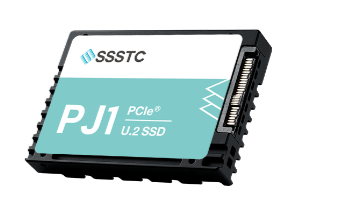
PJ1 U.2 NVMe™ SSD
NAND Flash: 3D TLC NAND Flash
Interface: PCIe® Gen4 x4
Sequential Read: UP to 7,000 MB/s
Sequential Write: UP to 4,200 MB/s
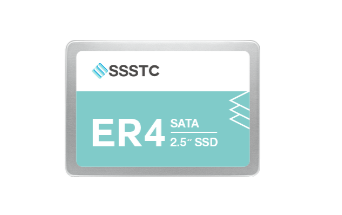
ER4 2.5" SATA SSD
NAND Flash: 3D TLC NAND Flash
Interface: SATA 3 (6Gb/s)
Sequential Read: UP to 550 MB/s
Sequential Write: UP to 530 MB/s
Which Applications Can Use DRAM-less SSDs?
A DRAM-less SSD may be suitable when the workload is relatively predictable, primarily read-intensive or sequential, and sensitive to cost, power consumption, or physical space.
Typical applications include:
- Embedded control systems
- IoT devices
- Surveillance data backup and NVR recording
- Boot drives
- Read-intensive and sequential-access workloads
When evaluating a DRAM-less SSD, check the following:
- HMB support from the NVMe host platform
- SSD firmware with optimized FTL and SLC caching mechanisms
- An appropriate over-provisioning allocation for the target workload
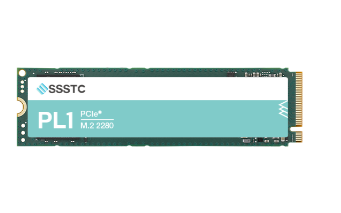
PL1 M.2 2280 NVMe™ SSD
NAND Flash: 3D TLC NAND Flash
Interface: PCIe® Gen3 x4
Sequential Read: 3,100 MB/s
Sequential Write: 1,500 MB/s
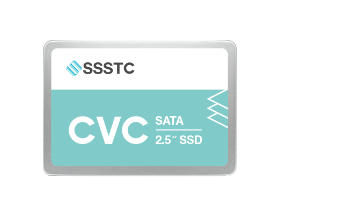
CVC 2.5" SATA SSD
NAND Flash: 3D TLC NAND Flash
Interface: SATA 3 (6Gb/s)
Sequential Read: UP to 550 MB/s
Sequential Write: UP to 510 MB/s
Conclusion
DRAM SSDs are typically the stronger choice for sustained random I/O, high command concurrency, and latency-sensitive workloads. DRAM-less designs are often better suited to predictable workloads where cost, power consumption, and board space are primary considerations.
DRAM configuration is only one part of SSD selection. Controller architecture, firmware, NAND type, sustained performance, endurance, power-loss protection, operating temperature, and product availability should also be evaluated against the target workload.
SSSTC provides DRAM and DRAM-less SSDs for enterprise and industrial systems across SATA and NVMe interfaces, with options for different capacities, form factors, endurance ratings, and operating temperatures. Product selection can be aligned with the host platform, workload profile, environmental requirements, and expected service life.
SSSTC provides the best quality, competitive cost mainstream storage products with superior customized service,using KIOXIA top-quality, reputable NAND flash memory in all our SSD products.Contact us to find more enterprise SSD or industrial SSD solutions.
__24C15hqqtC.png)
__24C15wOdCC.png)








__24C05XQ2my.jpg)





__24C05fplcZ.png)
__24C05vgHYC.png)