
__24C05D67dI.webp)
2026-05-21
SSD University
Immersion Cooling — The New Thermal Management Standard for AI Data Centers
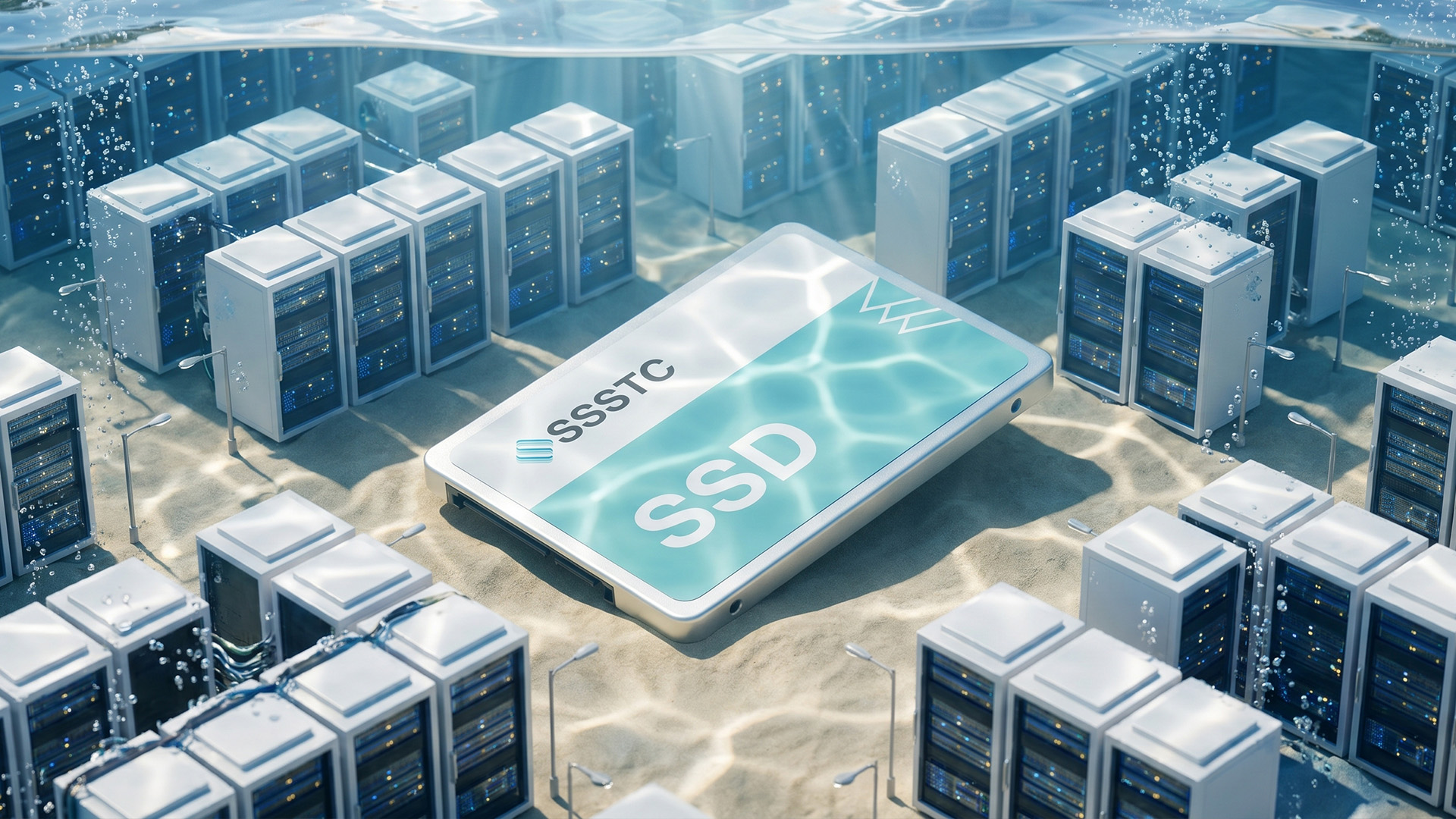
Immersion cooling is rapidly becoming the preferred thermal management solution for AI data centers due to its superior cooling efficiency, lower PUE, and ability to support high-density GPU and SSD deployments. Compared with traditional air cooling, immersion cooling significantly reduces power consumption and thermal throttling while improving long-term infrastructure reliability.
With the rapid advancement of Generative AI, Large Language Models (LLMs), and High-Performance Computing (HPC), data centers worldwide are facing unprecedented thermal management challenges. Traditional air-cooling architectures are increasingly unable to handle the enormous heat generated by high-density GPUs and AI servers. As a result, liquid cooling technologies—particularly immersion cooling—have rapidly emerged as a key infrastructure trend for next-generation AI data centers.
What Is Immersion Cooling?
Immersion cooling is a thermal management technology in which entire IT systems—including servers, motherboards, GPUs, and SSDs—are directly immersed in a non-conductive dielectric fluid. The fluid efficiently absorbs and transfers heat away from electronic components.
Liquids can transfer heat up to 1,000 times more efficiently than air while consuming only one-tenth of the energy required by traditional air-cooling systems. Thanks to the superior thermal conductivity of dielectric fluids, immersion cooling can rapidly dissipate the massive heat generated by high-density AI workloads.
Compared with conventional air-cooling architectures, immersion cooling requires higher initial deployment costs but delivers significantly superior cooling performance and operational efficiency. Key advantages include:
- Significantly reduced cooling energy consumption (40–50%)
In conventional data centers, cooling systems typically account for 40–50% of total energy consumption. Immersion cooling can reduce cooling energy usage by up to 90%, lowering overall IT cooling power consumption by approximately 50%. - Higher server density deployment
- Improved Power Usage Effectiveness (PUE)
- Reduced thermal throttling to ensure stable AI computing performance
Why Must AI Data Centers Adopt Liquid Cooling Technology?
AI computing is driving data center power density to unprecedented levels. A traditional data center rack typically consumes around 5–10 kW, while AI server racks now commonly reach 40–100 kW, with some ultra-high-density deployments exceeding 120 kW.
For example, training a GPT-3 model can consume approximately 190,000 kWh of electricity. By reducing a data center’s PUE from 1.5 to 1.1 through liquid cooling technology, operators can potentially reduce power consumption by nearly 30%—equivalent to approximately 50,000 kWh.
As thermal loads continue to rise dramatically, conventional air-cooling systems face limitations in airflow, noise control, and hotspot mitigation. Consequently, liquid cooling is no longer considered an optional upgrade—it has become essential infrastructure for modern AI data centers.
| Comparison | Air Cooling | Immersion Cooling |
| Cooling Medium& Method |
Cold air convection and circulation |
Direct heat absorption through dielectric fluid immersion |
| Cooling Efficiency |
Lower efficiency; affected by ambient temperature |
Extremely high efficiency with rapid heat transfer |
| PUE Performance |
Typically > 1.5 |
Can be reduced to 1.02–1.1 |
| Ideal Applications |
General enterprise data centers |
AI training centers, HPC environments, hyperscale data centers |
Types of Liquid Cooling Technologies
1. Cold Plate Liquid Cooling
Cold plate liquid cooling transfers heat through direct contact between cooling plates and high-heat components such as GPUs and CPUs. Heat is removed by liquid circulating within the cold plate.
Key Features:
- Currently accounts for approximately 70–85% of AI liquid cooling deployments
- PUE can reach 1.1–1.15
- Relatively simple installation with high compatibility for existing infrastructures
- Suitable for most enterprise AI deployments
2. Immersion Cooling
In immersion cooling systems, electronic components are directly submerged in dielectric fluid. The fluid comes into direct contact with all component surfaces to efficiently remove heat.
Key Features:
- Currently accounts for approximately 5–15% of AI liquid cooling deployments
- PUE can reach 1.02–1.05, among the lowest available today
- Delivers the highest cooling efficiency for ultra-high-density deployments
- Adoption is expected to continue growing as next-generation GPUs such as the NVIDIA GB300 demand increasingly higher power consumption
Immersion cooling can be further categorized into the following types:
-
Single-Phase immersion cooling
-
Two-Phase immersion cooling
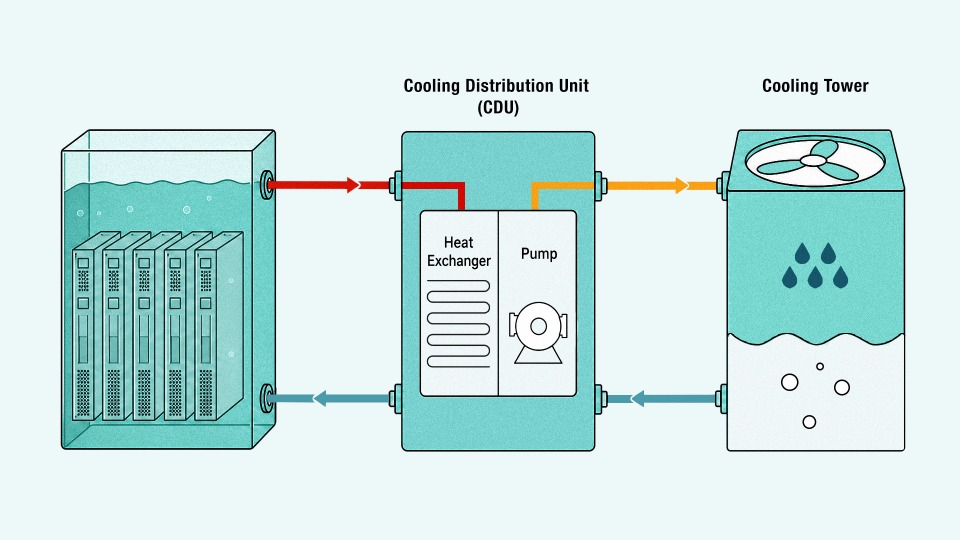
Single-Phase immersion cooling
The dielectric fluid absorbs heat and circulates through a heat exchanger connected to an external cooling tower. After cooling, the fluid is pumped back into the system for continuous operation. This architecture features a relatively simple design and easier maintenance.
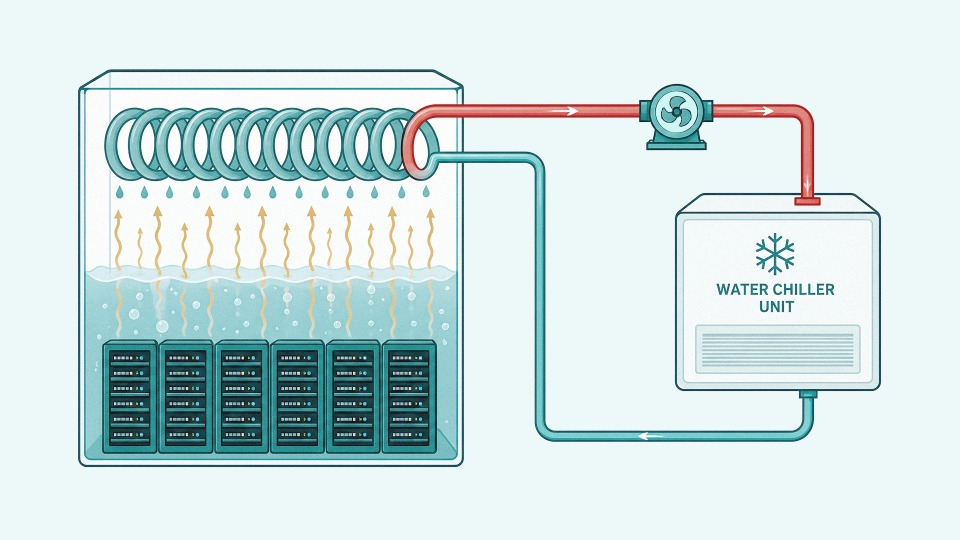
Two-Phase immersion cooling
Equipment is installed inside sealed immersion tanks filled with low-boiling-point dielectric fluid. After absorbing heat, the fluid vaporizes and later condenses back into liquid form through condenser coils, enabling continuous circulation. While this approach provides exceptional cooling efficiency, it also involves more complex system design and higher deployment costs.
Why Must SSDs Support Immersion Cooling in AI Servers?
In AI training and inference environments, enterprise SSDs are responsible for:
- High-speed access to training datasets
- Frequent writing of model checkpoints
- Storage of terabyte-scale model parameter files
- Sustaining high IOPS and throughput workloads
As a result, enterprise SSDs also generate significant heat under intensive workloads, making them a critical thermal source within AI servers.
Challenges for Traditional SSDs in Immersion Cooling Environments
Conventional SSDs face several material compatibility risks when deployed in immersion cooling environments, including:
- Material Compatibility: Certain conventional materials used in the industry may not be fully suitable for liquid cooling environments.
- Component Stability: Some components may experience stability challenges during long-term immersion operation.
- Thermal Design Adaptation: Traditional air-cooling thermal designs may require adjustment for liquid cooling environments.
Consequently, not all SSDs are suitable for long-term immersion cooling deployment. SSDs intended for immersion environments require dedicated design optimization and comprehensive validation testing.
Conclusion: Enterprise Storage Ready for the Liquid Cooling Era
As AI model sizes and computing demands continue to grow exponentially, the future of data centers is inevitably moving toward high-density, energy-efficient, and low-carbon infrastructure.To successfully adopt immersion cooling technologies, enterprises must ensure that storage devices undergo rigorous validation for long-term operation in liquid cooling environments.
SSSTC has optimized SSD compatibility specifically for immersion cooling environments through advanced material selection, component protection, and structural design enhancements to improve corrosion resistance. Supported product lines include the SATA ER3, and ER4 series, as well as the PCIe® U.2 PJ1 and EJ5 series.
Taking the ER3 series as an example, SSSTC successfully completed rigorous 3-year and 5-year immersion reliability validation through system-level testing using 3M™ FC-40 dielectric fluid. Test results demonstrated a capacitor degradation rate of only approximately 10–13%, well below the specification limit of 20%.These advancements help data centers improve Power Usage Effectiveness (PUE) while enhancing overall system reliability for next-generation AI infrastructure.
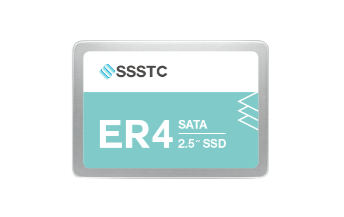
ER4 2.5" SATA SSD
NAND Flash: 3D TLC NAND Flash
Interface: SATA 3 (6Gb/s)
Sequential Read: UP to 550 MB/s
Sequential Write: UP to 530 MB/s
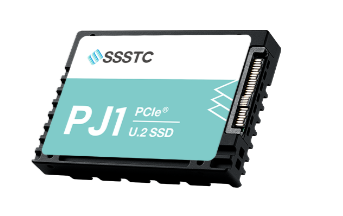
PJ1 U.2 NVMe™ SSD
NAND Flash: 3D TLC NAND Flash
Interface: PCIe® Gen4 x4
Sequential Read: UP to 7,000 MB/s
Sequential Write: UP to 4,200 MB/s
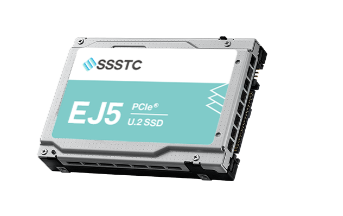
EJ5 U.2 NVMe™ SSD
NAND Flash: 3D TLC NAND Flash
Interface: PCIe® Gen5 x4
Sequential Read: UP to 14000 MB/s
Sequential Write: UP to 7500 MB/s
SSSTC provides the best quality, competitive cost mainstream storage products with superior customized service,using KIOXIA top-quality, reputable NAND flash memory in all our SSD products.Contact us to find more enterprise SSD or industrial SSD solutions.
__24C15hqqtC.png)
__24C15wOdCC.png)





__24C05XQ2my.jpg)



__24C05fplcZ.png)
__24C05vgHYC.png)