







Immersion Cooling

The Future is Hyperscale: AI and Beyond Immersion cooling
Immersion Cooling for a Greener TomorrowAI and Liquid Immersion Cooling Technology
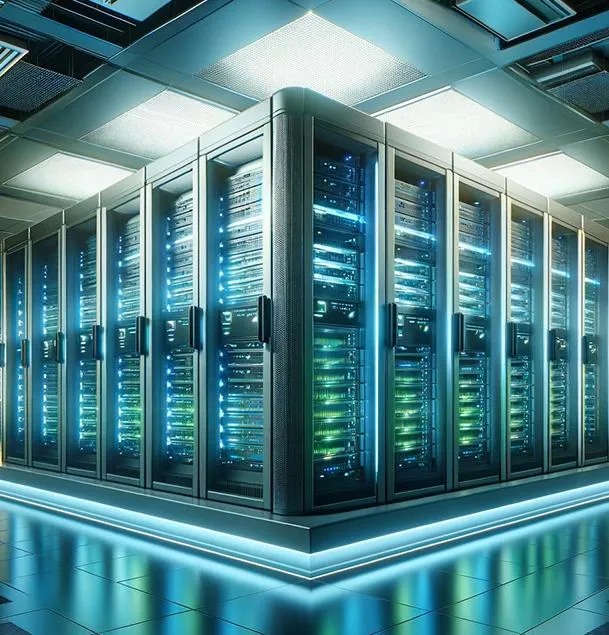
Artificial Intelligence (AI) is rapidly transforming the way we live and do business, driving exponential growth in compute and storage demands. As AI applications continue to scale, data center infrastructure—particularly hyperscale data centers—faces increasing pressure to support higher performance, capacity, and efficiency.
This surge in AI-driven workloads significantly increases power consumption, creating new challenges for data centers at a time when global energy efficiency and sustainability have become critical priorities.
One potential solution to this challenge is to improve data center efficiency by transitioning from traditional air cooling to liquid cooling technologies. Among these approaches, liquid immersion cooling stands out as a highly effective option. In fact, adoption of immersion cooling is expected to grow at a rate exceeding that of the global hyperscale data center market itself.
Large-scale computing inevitably requires large-scale storage. The data volumes associated with AI models—including large language models—integrated circuit design, and metadata processing are expanding rapidly. By operating storage solutions in liquid-cooled environments, it becomes possible to extend product lifespan and improve operating conditions. Over the long term, this not only reduces the total cost of ownership (TCO) of storage systems, but also helps mitigate environmental impact through improved efficiency and durability.

Immersion Cooling Technology
In this architecture, heat is transferred directly from heat-generating components into the cooling fluid and then removed through circulation and heat exchange systems. This significantly reduces reliance on fans and air-conditioning infrastructure, while improving overall energy efficiency. Stable thermal conditions also support sustained system operation and help minimize performance fluctuations caused by heat accumulation.
Among various liquid cooling solutions, liquid immersion cooling offers distinct advantages. Although initial deployment costs may be higher and certain environmental considerations must be addressed, only hardware designed to meet strict specifications can operate reliably in immersion environments without degradation. Components that exhibit minimal chemical interaction with immersion fluids benefit from longer service life and higher cooling efficiency. Following these stringent design principles, SSSTC develops SSDs specifically engineered to deliver reliable storage performance in liquid immersion–cooled server environments.
For solid-state drives (SSDs), liquid immersion cooling enables more consistent operating temperatures under high workloads and intensive I/O conditions. This helps reduce the risk of thermal throttling, slow component aging, and ultimately improves system reliability and longevity. As AI, edge computing, and high-performance data centers continue to evolve, liquid immersion cooling is becoming an increasingly important thermal solution for high-density compute and storage environments.
Contact US to learn how our SSD solutions support liquid immersion cooling and AI data center applications.
__24C15hqqtC.png)
__24C15wOdCC.png)







__24C05XQ2my.jpg)



__24C05fplcZ.png)
__24C05vgHYC.png)