
__24C05D67dI.webp)
2025-01-08
SSD University
Enterprise SSD vs Industrial SSD: Key Differences, Use Cases & How to Choose
Enterprise-Grade SSDs vs Industrial-Grade SSDs
The global SSD market is projected to surpass $80 billion by 2025, fueled by explosive growth in data centers, cloud computing, and Industrial IoT. As storage demands diversify across industries, the question is no longer just how fast an SSD is—but which type of SSD is engineered for your specific environment.Two categories dominate the professional storage landscape: Enterprise SSDs and Industrial SSDs. While they may appear similar on the surface, they are purpose-built for fundamentally different workloads, environments, and reliability requirements.
This guide breaks down the core technical differences, application scenarios, and selection criteria to help you make the right storage decision—and introduces SSSTC's specialized product lines designed to meet both needs.
What Is an Enterprise SSD?
Enterprise SSDs are designed for high-throughput, latency-sensitive computing environments such as data centers, cloud servers, and AI/ML platforms. They prioritize speed, data security, and sustained performance under 24/7 workloads.
Key characteristics:
- High IOPS and low, consistent latency for real-time workloads
- DWPD ratings of 3 DWPD or higher for write-intensive applications
- Advanced encryption: AES-256, End-to-End Data Protection (E2E)
- Power Loss Protection (PLP) to prevent data corruption during outages
- Operating temperature: 0°C to 70°C (controlled data center environments)
Ideal for: Cloud computing, large-scale databases, real-time financial transactions, AI/ML inference, virtual machine hosting.
What Is an Industrial SSD?
Industrial SSDs are built for mission-critical deployments in harsh physical environments where reliability, durability, and wide-temperature operation take precedence over raw speed.
Key characteristics:
- Wide operating temperature range: -40°C to +85°C (I-temp)
- High shock and vibration resistance for rugged field deployments
- ECC (Error Correction Code) and Power Loss Protection (PLP)
- Stable, deterministic performance across varying environmental conditions
- Longer product lifecycle support for industrial supply chains
Ideal for: Factory automation, transportation systems, aviation, medical devices, military equipment, edge IoT deployments.
Differences between Enterprise SSDs and Industrial SSDs
-
Durability & Write Endurance (TBW & DWPD)
- Enterprise SSDs: To meet high data writing demands in data centers and servers, Enterprise SSDs feature exceptional TBW. They also offer a significantly high DWPD, commonly achieving 3 DWPD or higher, making them ideal for high-frequency cyclic writing applications.
- Industrial SSDs: Although their TBW is lower compared to Enterprise SSDs, it is still higher than consumer-grade SSDs. Designed for prolonged stable performance, Industrial SSDs excel even in extreme environments.
-
Operating Environment
- Enterprise SSDs: Optimized for controlled environments such as data centers, these SSDs deliver sustained performance within narrow operating temperature ranges (0°C to 70°C).
- Industrial SSDs: Capable of operating across extreme temperature ranges:Wide Temperature (I-temp,-40°C to +85°C), Industrial SSDs are built for rugged environments. With strong shock and vibration resistance, they are ideal for use in transportation, aviation, and industrial automation.
Learn more:Solid State Storage Industrial Grade Wide Temperature (I-temp) SSD Solutions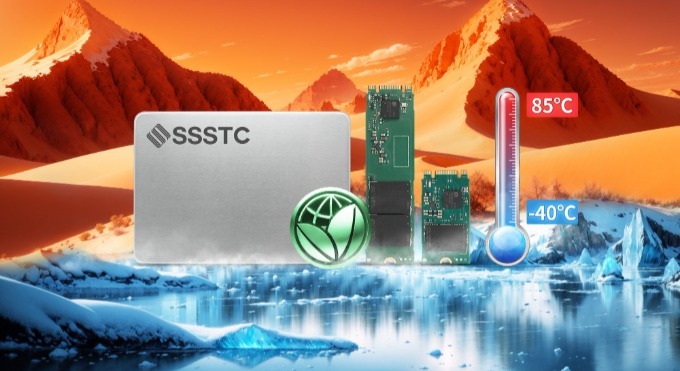
-
Performance & Latency
- Enterprise SSDs: Known for high IOPS (Input/Output Operations Per Second), low latency, and stable QoS(Quality of Service). This design supports millions of simultaneous user requests and is ideal for latency-sensitive applications, such as real-time data analytics and financial transactions.
- Industrial SSDs: While they may lag behind Enterprise SSDs in latency, their stability and reliability meet the demands of automation systems and rugged conditions.
-
Data Protection & Encryption
- Enterprise SSDs: Equipped with advanced data security features such as End-to-End Data Protection (E2E), AES-256 encryption, and Power Loss Protection (PLP), these SSDs cater to data-sensitive business requirements.
- Industrial SSDs: Similarly, they include ECC (Error Correction Code) and PLP but focus more on shock and vibration resistance for enhanced durability.
Application Scenarios for Enterprise SSDs and Industrial SSDs
- Enterprise SSDs:
-Cloud data centers and hyperscale infrastructure
-AI training, inference, and machine learning pipelines
-Real-time financial transaction systems
-Virtualization and VDI deployments
-Large-scale relational databases
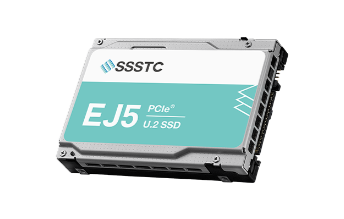
EJ5 Series:Designed for AI, Machine Learning (ML), virtualization, and real-time data analytics.
Read-intensive (1 DWPD for 5 years): 3840GB / 7680GB / 15360GB
Mixed-use (3 DWPD for 5 years): 3200GB / 6400GB / 12800GB
Mixed-use (3 DWPD for 5 years): 3200GB / 6400GB / 12800GB
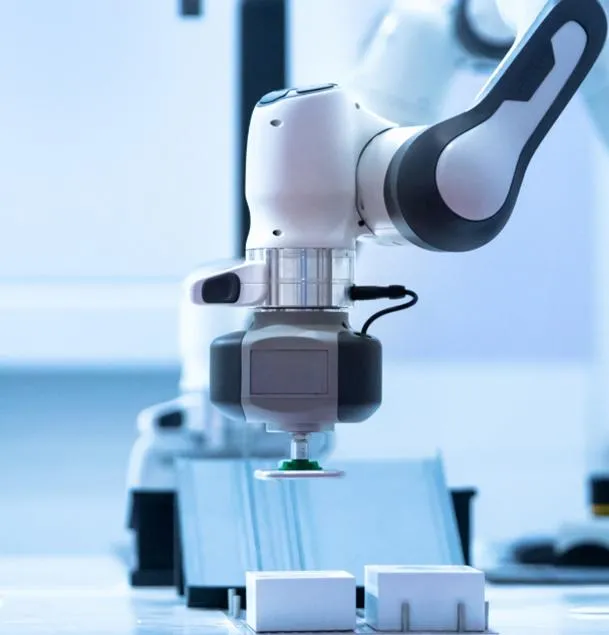
- Industrial SSDs:
-Smart manufacturing and factory automation (Industry 4.0)
-Railway, aviation, and autonomous vehicle systems
-Medical imaging and portable diagnostic devices
-Military and defense portable equipment
-Outdoor edge computing and IoT nodes
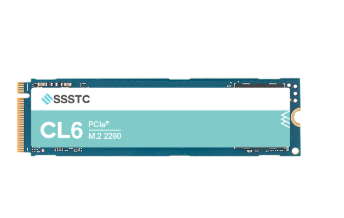
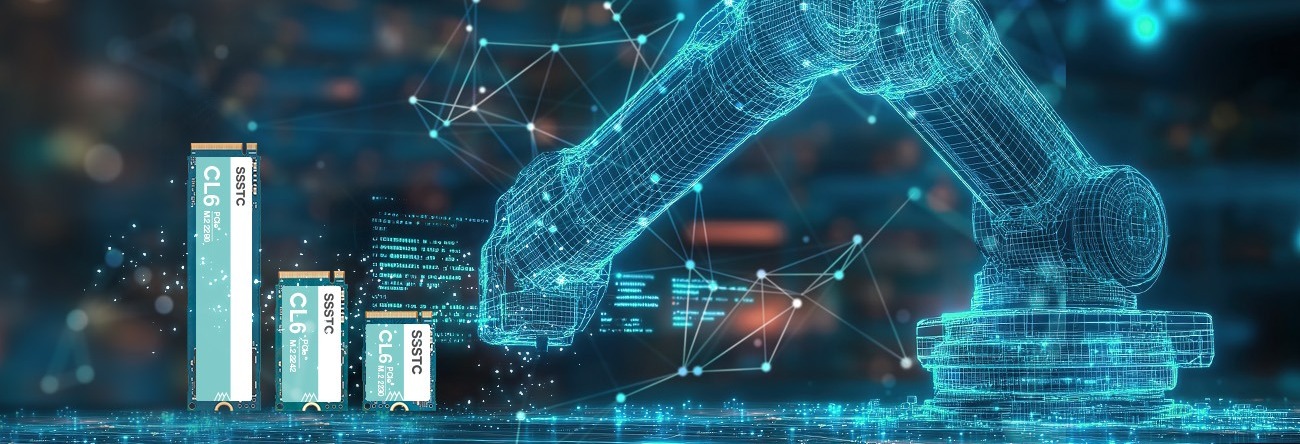
CL6 Series: Utilizing KIOXIA's 6th Gen BiCS FLASH technology.
NAND Flash Type: 3D TLC NAND Flash
Interface: PCIe® Gen4 x4
Sequential Read Speed: Up to 6,800 MB/s
Sequential Write Speed: Up to 4,800 MB/s
SSD Selection Advice
Use this quick decision framework:
Choose Enterprise SSD if:
- Your environment is a data center or server room with controlled temperature
- Your workload involves high-frequency reads/writes, real-time analytics, or AI inference
- Data security and regulatory compliance (AES-256, E2E) are mandatory requirements
Choose Industrial SSD if:
- Your device operates in extreme temperatures, high vibration, or outdoor conditions
- Long-term product lifecycle and supply chain stability are critical
- Your application is in transportation, automation, medical, or defense industries
SSSTC SSD Solutions for Different Needs
The Enterprise SSD vs Industrial SSD decision ultimately comes down to operating environment and workload type. Enterprise SSDs maximize performance, scalability, and security for data center-driven computing. Industrial SSDs deliver unmatched durability and reliability where physical conditions are unpredictable and failure is not an option.SSSTC offers purpose-built solutions in both categories, all backed by KIOXIA's industry-leading NAND technology. Whether you're deploying in the cloud or on the factory floor, SSSTC delivers customized storage that meets your operational demands.
SSSTC provides the best quality, competitive cost mainstream storage products with superior customized service,using KIOXIA top-quality, reputable NAND flash memory in all our SSD products.Contact us to find more enterprise SSD or industrial SSD solutions.
__24C15hqqtC.png)
__24C15wOdCC.png)





__24C05XQ2my.jpg)





__24C05fplcZ.png)
__24C05vgHYC.png)