

__24C05D67dI.webp)
2026-03-30
SSD University
What Kind of SSD Does Edge Computing Need: Low-Latency, High-Endurance Solutions
Compared to traditional centralized data centers, edge computing emphasizes local analysis, real-time responses, and reduced latency right where the data is generated. However, this places higher demands on underlying storage devices—especially Solid State Drives (SSDs)—requiring them to balance environmental tolerance, real-time performance, security, and long-term stability.
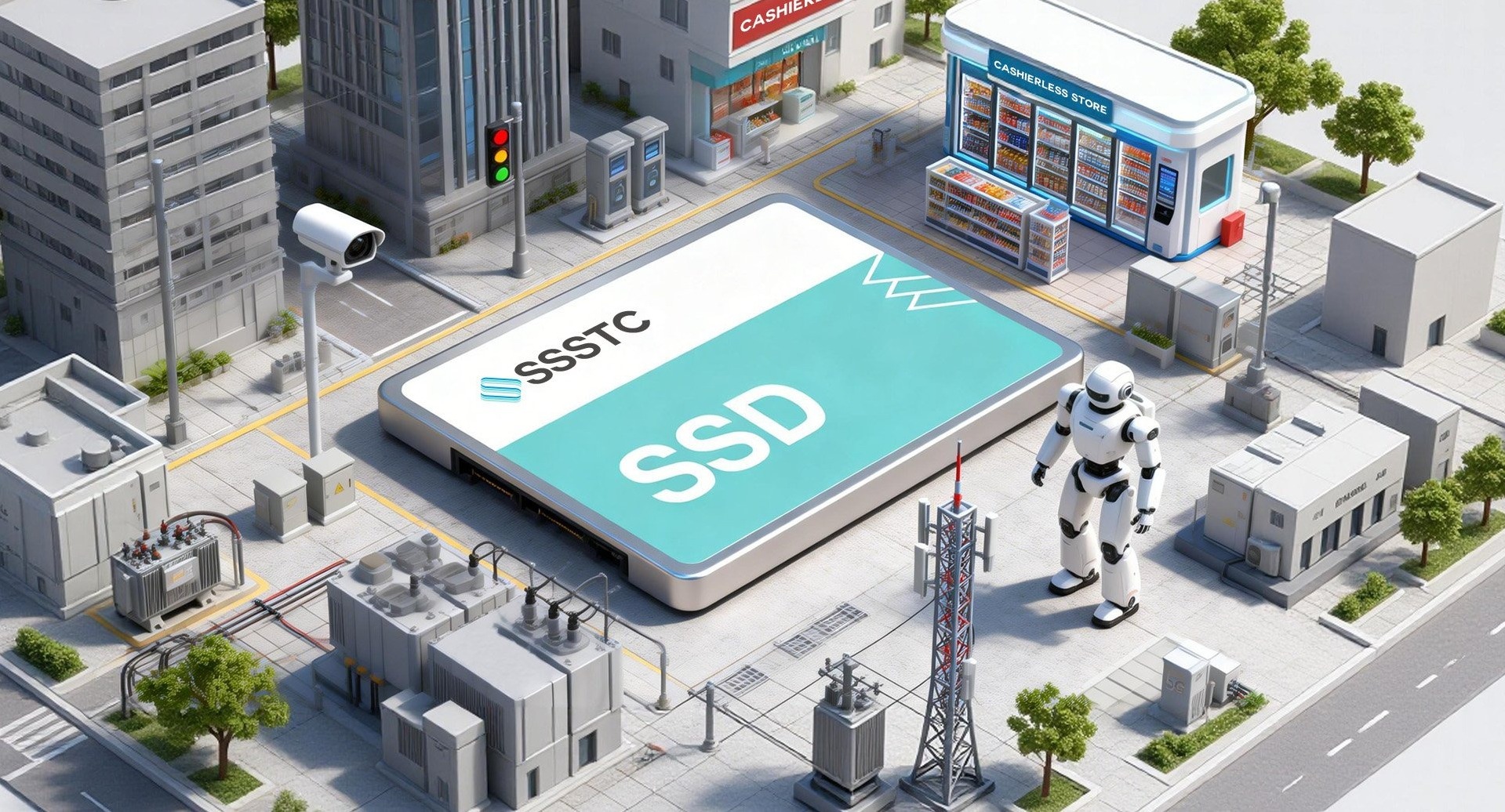
Key SSD Requirements for Edge Computing
-
Environmental Tolerance
Edge devices are frequently deployed in outdoor or semi-outdoor environments, such as roadside cabinets, industrial sites, in-vehicle systems, smart surveillance, and unmanned retail kiosks. These settings typically lack climate control, meaning edge devices must operate for extended periods while enduring extreme temperatures, prolonged vibration, sudden impacts, and fluctuating humidity. Without excellent environmental tolerance, SSDs are prone to data errors or complete device failure. Therefore, selecting SSDs that have passed wide temperature or extended temperature testing, feature anti-vibration and anti-shock designs, and utilize moisture- and dust-proof packaging is crucial to ensuring the stable operation of edge systems.
Further Reading >> Introduction to SSD Temperatures: Standard, Extended, and Industrial Wide Temperatures -
Power-Loss Protection (PLP)
Edge nodes are often deployed in remote or unattended locations. In the event of an unexpected power outage, incomplete data writes can lead to file corruption, system anomalies, or even disrupted data processing and equipment control, bringing application systems to a halt. SSDs equipped with Power-Loss Protection (PLP) can detect power anomalies and provide backup power via built-in capacitors or firmware control. This allows critical data in the cache to be safely flushed to the NAND Flash, safeguarding the FTL mapping table and application-level data from loss, and effectively minimizing the risk of data corruption. For edge systems in healthcare, transportation, and industrial automation that require long-term, stable operation, the PLP mechanism is an indispensable specification when selecting an SSD.
Further Reading >> SSD Power-Loss Protection Explained: A Comparison of HW PLP, FW PLP, and PLN -
Low Latency and Stable Performance
Edge devices must process massive data streams from sensors, cameras, and AI models in real time, demanding exceptionally high standards for read/write latency and performance consistency. While edge workloads may not be as IOPS-intensive as those in data centers, storage systems must still deliver reliable response times during prolonged operation and sudden traffic spikes. To meet the real-time and stability demands of edge applications, SSD performance should feature:
Low Latency: The ability to swiftly respond to data read/write requests, preventing data congestion, delayed AI inference, or interrupted control logic.
Performance Consistency: Maintaining stable output during continuous, long-term operation or unexpected workload surges, effectively avoiding performance drops or latency spikes.
When evaluating an SSD's suitability for edge environments, it is essential to examine its IOPS Consistency, Write Consistency over extended periods, and Latency Distribution—particularly at P99, P99.9, and P99.99 levels. These metrics help determine if the SSD can sustain efficient and stable data processing under extreme conditions without becoming a performance bottleneck for the edge system. -
High Endurance
Edge devices often operate 24/7. Whether recording video around the clock or intensively writing sensor data and analysis results, they face heavy daily write pressures. If an SSD lacks sufficient endurance, it can wear out prematurely, resulting in write errors or data loss, which may ultimately lead to system failures and downtime. Therefore, it is critical to select an SSD with adequate TBW (Total Bytes Written) or DWPD (Drive Writes Per Day) specifications, and to choose the appropriate NAND type based on actual workloads:
• pSLC: Offers the highest endurance and write stability, ideal for write-intensive, real-time response tasks (e.g., traffic monitoring, AI training buffers).
• eTLC: Enterprise-grade TLC that withstands more P/E cycles than standard TLC, suitable for medium-to-high write edge applications.
• High-OP TLC: Enhances endurance and stability by increasing Over-Provisioning space. It strikes a balance between cost and durability, perfect for moderate, non-extreme write applications.
• TLC / QLC: Suited for read-centric scenarios like local caching or backup systems, particularly when paired with appropriate OP strategies to extend lifespan.
Selecting a NAND type tailored to the workload effectively extends the SSD's lifespan, mitigates the risks of repair and replacement, and ensures the edge device continues to operate reliably under high-stress conditions.
Further Reading >> A Guide to NAND Flash Memory: Comparing SLC, MLC, TLC, and QLC -
Data Security and Privacy
Edge devices frequently collect and process large volumes of sensitive local data, such as surveillance footage, personnel logs, equipment statuses, and medical test results. Unauthorized access or data breaches can cause system paralysis, operational disruptions, and severe compliance or privacy risks. To mitigate these security threats, SSDs must feature multi-layered data security mechanisms, including:
• AES-256 Hardware Encryption: Performs real-time data encryption and decryption directly at the SSD controller level, protecting the contents stored in the NAND Flash. Even if the device is stolen or dismantled, the data remains unreadable.
• TCG Opal Support: A robust SSD access control mechanism supporting password authentication and tiered user management. It enables Pre-boot Authentication and allows administrators to set specific data access zones and permissions for different users, making it ideal for applications with strict security requirements.
Secure Erase / Crypto Erase: Supports rapid and thorough data wiping, essential for clearing residual data before device disposal, repair, or repurposing to prevent data leaks.
• Digital Signature Firmware Verification: During firmware execution or updates, the controller uses a built-in public key to verify that the firmware is authorized by the original manufacturer and has not been tampered with. Only verified firmware can be executed, effectively preventing the injection of malicious code or unauthorized modifications.
• FIPS Certification: For highly sensitive sectors like transportation, healthcare, and finance, deploying SSDs with FIPS certification or those that have passed industrial cybersecurity testing is highly recommended to ensure security and compliance throughout the data lifecycle. -
Long-Term Supply and Fixed BOM
Edge devices—such as smart streetlights, traffic signal controllers, medical monitors, and industrial gateways—often boast deployment lifecycles of 5 to 10 years. They require exceptional consistency across hardware batches to ensure system compatibility and firmware stability. Therefore, choosing an SSD provider that commits to long-term supply and a fixed BOM (Bill of Materials) is crucial. A guaranteed consistency in key components, such as NAND Flash and controllers, helps to:
• Prevent compatibility issues or performance discrepancies caused by component changes.
• Eliminate the labor and time costs associated with re-validation and re-testing.
• Provide consistent and stable system integration for large-scale edge deployments.
For large-scale, long-term edge systems, a fixed BOM is not merely a guarantee of stable quality; it also streamlines maintenance and effectively controls the Total Cost of Ownership (TCO).
Common SSD Form Factors for Edge Devices
Depending on space constraints, thermal designs, and expansion requirements, here are several typical form factors for edge equipment:
| Form Factor | Common Use Cases |
| M.2 2280 / M.2 2242 |
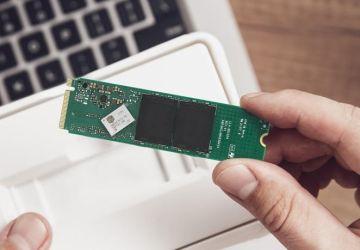
Commonly found in embedded industrial PCs and edge computing systems, offering an optimal balance of compact size and high performance. |
| 2.5-inch SATA SSD |
Ideal for devices requiring stable power delivery and medium-to-large capacities, such as video recording servers. |
| E1.S |
A next-generation hot-swappable form factor designed for high-density edge servers, increasingly being adopted in edge data processing equipment. |
| BGA SSD |
Perfect for ultra-compact systems with severe space limitations, including in-vehicle platforms, smart monitoring modules, and IoT terminals. |
Choosing the Right SSD: The Guarantee of Edge Performance
Edge computing is more than just "small-scale servers" or "distributed storage"; it represents a new frontier with harsher environments and stringent real-time processing demands. As the critical storage component, SSDs must deliver superior endurance, stability, and data protection to sustain long-term, reliable operations and immediate responsiveness in edge environments.
Solid State Storage Technology Corporation (SSSTC) provides industrial and enterprise SSD solutions purpose-built for edge applications. Covering environmental tolerance, PLP mechanisms, low latency, performance consistency, high endurance, robust data security, and long-term supply with fixed BOM control, we help businesses effectively tackle the multiple storage challenges of edge computing—ensuring stable systems, secure data, and flawless operations.
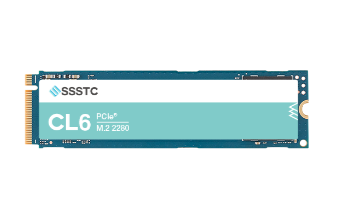
CL6 M.2 2280
NAND Flash: 3D TLC NAND Flash
Interface: PCIe® Gen4 x4
Sequential Read: 6,000 MB/s
Sequential Write: 5,300 MB/s
-
SSSTC SATA SSD
Widely used in rugged computers, laptops, servers, edge servers, video surveillance systems, and enterprise-level storage solutions, they offer stable and dependable data storage. -
SSSTC NVMe™ SSD
With high-speed transfer and low latency, it's used in data centers, cloud services, big data, gaming, and graphics, enhancing system performance and speed.
__24C15hqqtC.png)
__24C15wOdCC.png)







__24C05XQ2my.jpg)





__24C05fplcZ.png)
__24C05vgHYC.png)